

Fucoidan, a unique compound from brown seaweed, has gained global attention for its health benefits — from immune balance to cellular protection. But not all fucoidan supplements are equal. The secret lies in its molecular size.
In this article, we’ll explain why Low Molecular Weight Fucoidan (LMF), also called Oligo Fucoidan, is superior to High Molecular Weight Fucoidan (HMF), and how our patented next-gen dual tech has unlocked its true clinical potential.
What Is Fucoidan?
Fucoidan is a water-soluble sulfated polysaccharide found in brown seaweeds like Mozuku, Mekabu, Laminaria japonica and Fucus vesiculosus. It’s widely studied for:
-
- Supporting immune system balance
-
- Promoting cellular repair and recovery
-
- Complementing cancer care and chronic disease support
Low vs High Molecular Weight: Why Size Matters
- High Molecular Weight Fucoidan (HMF):
- Naturally occurring form
- Molecules too large for efficient absorption
- Limited bioavailability → weaker health effects
- Low Molecular Weight Fucoidan (LMF / Oligo Fucoidan):
- Specially processed into smaller molecules
- Absorbed 3–4x better in the gut
- Delivers stronger benefits for immunity and cellular protection
The Evolution of LMF Technology
The road to unlocking LMF’s full potential has been a journey:
2008: First-Generation LMF
- Developed using early enzymatic breakdown methods.
- Problem: Produced 55% insoluble waste (11% protein, 22% sugar, rest unusable).
- Japan studies reported no clear immune enhancement compared to HMF.
- Result: Limited effectiveness, purity doesn’t comply to clinical grade.
2020: Next-Generation LMF (Breakthrough)
- Developed with ultra-filtration technology → eliminated insoluble waste.
- Added Ultra-Permeability Matrix → boosted absorption 300–600% higher than first-gen LMF.
- Results: True clinical-grade fucoidan with proven immune and cellular benefits.
SULFUCO Fucoidan is based on this Patented Next-Gen Technology, ensuring purity, potency, and superior bioavailability.
Scientific Advantages of Oligo Fucoidan(LMF)
1. Enhanced Absorption
Smaller molecules + ultra-permeability matrix = maximum delivery to target cells.
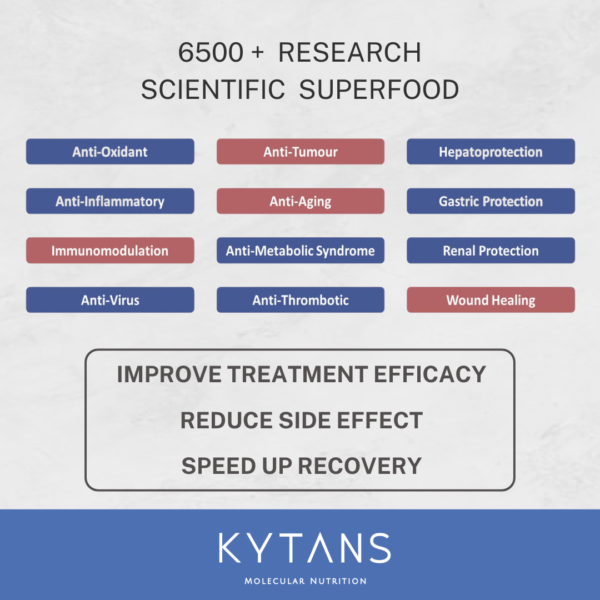
2. Stronger Immune Support
- Improves NK cell activity
- Balances cytokines (IFN-γ, TNF-α, IL-10)
- Supports immune defense against stress and disease
3. Cellular & DNA Protection
- Protects telomeres (anti-aging marker)
- Reduces oxidative stress
- Aids tissue recovery
4. Treatment Synergy
Clinical studies suggest LMF can work synergistically with conventional therapies, reducing side effects and improving treatment outcomes.
Why Standard Fucoidan Falls Short
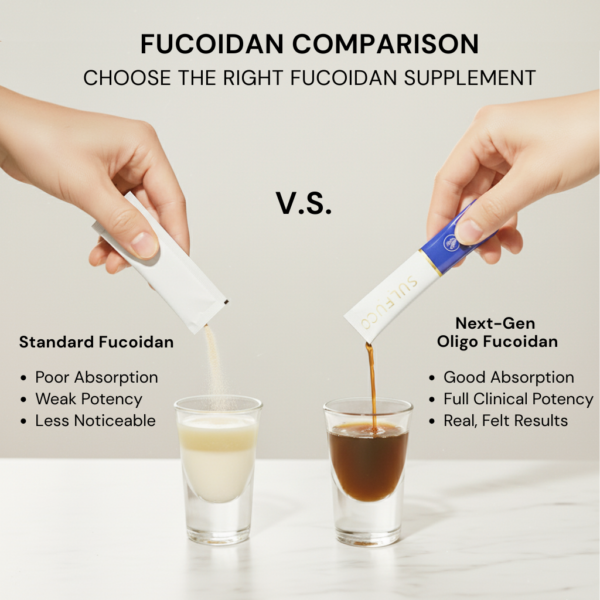
Most fucoidan powders or extracts on the market are not low molecular weight — and certainly not next-gen. This means:
- Poor absorption
- Lower clinical effectiveness
- Consumers may not feel results
With Oligo Fucoidan (next-gen LMF), you get the full potential of fucoidan unlocked.
How to Choose the Right Fucoidan Supplement

Look for:
- ✅ Low Molecular Weight Fucoidan (Oligo Fucoidan) clearly stated on the label
- ✅ Next-Gen Patented Dual Tech (not outdated 2008 version)
- ✅ Purity and transparency (no insoluble waste)
- ✅ Clinical research and pharmaceutical-grade production (GMP, PIC/S)
Final Thoughts
Fucoidan is one of the most researched natural compounds for immunity and cellular health. But only when processed into Low Molecular Weight Fucoidan (Oligo Fucoidan) — using the latest patented technology — does it reach its true potential.
For consumers who value science-backed results, choosing the right molecular weight and right technology is the key difference between ordinary fucoidan and clinically effective fucoidan.
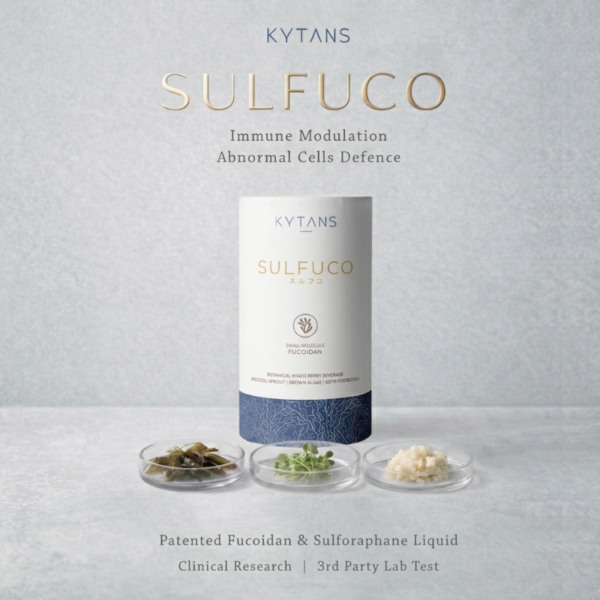
- Immune Modulation & Abnormal Cells Defense
- High Dosage, High Purity
- Formulated ith patented next-gen dual tech Oligo Fucoidan, Broccoli Sprout Sulforaphane and Kefir M1 Postbiotics.
✅ References
Zhu Z. et al., 2016. Fucoidan bioavailability and activity.
Maruyama H. et al., 2003. Immune activation by fucoidan.
Aisa Y. et al., 2005. Fucoidan induces apoptosis in cancer cells.
Ale M.T. et al., 2011. Fucoidans: Structural and bioactive properties.
Tokita Y. et al., 2010. Absorption and effects of LMW fucoidan.
Chen X. et al., 2014. Fucoidan’s immune modulation via cytokines.
Shibata H. et al., 2003. Fucoidan and telomere protection.
Fitton J.H., 2015. Therapeutic potential of fucoidan.